Nyheder
Forlig
Døgnrapport
Arrangementer
Følg Forsvaret
Forsvarets arealer
Publikationer

Forsvaret er til stede over hele Kongeriget Danmark og bidrager til Danmarks indsats for at fremme fred og stabilitet samt til NATOs kollektive afskrækkelse og forsvar.
Forsvaret håndhæver Danmarks og Rigsfællesskabets suverænitet og er en del af samfundets samlede beredskab. Forsvaret bidrager til international konfliktforebyggelse og deltager i fredsbevarende og fredsskabende indsatser, når Folketinget beslutter at anvende militær ekspertise og kapacitet.

Det er ikke tilladt at bruge sin uniform i forbindelse med en valgkamp. For at imødegå eventuelle misforståelser i forbindelse med folketingsvalget den 24. marts 2026 følger her en kort beskrivelse af reglerne for brug af uniform.

I takt med at Arktis og Nordatlanten får stigende strategisk betydning, styrker NATO-allierede deres militære tilstedeværelse i regionen.

Forsvarets Center for Militær Fysisk Træning har indsamlet data fra et hold danske soldater i Nordsverige. Undersøgelsen skal give Forsvaret et indblik i kuldens påvirkning af soldaternes helbred og kampkraft under arktiske indsættelser.

Efter fire års forsvarskrig mod Rusland har ukrainerne gjort sig mange dyrt købte erfaringer, som Danmark og NATO nu lærer af. I dag er ukrainske læger, sygeplejersker og sanitetssoldater fra frontlinjen i Danmark for at dele deres erfaringer.

Udleveringen af omkring 50.000 nye M/25 geværer til Forsvaret og Hjemmeværnet er gået i gang. På Flyvestation Karup har de første soldater allerede været på skydebanen for at teste, indskyde og tilpasse deres nye våben.

Formanden for Naalakkersuisut, Jens-Frederik Nielsen, er i denne uge vært for Hans Majestæt Kong Frederik X’s besøg i Grønland. Sammen besøger de Forsvaret i Nuuk og Kangerlussuaq – et besøg, som chefen for Arktisk Kommando sætter stor pris på.

Elever fra Arktisk Basisuddannelse bruger uddannelsen som springbræt til job i Forsvaret og i det grønlandske beredskab. I en ny serie kan du følge det første hold grønlandske unge, der gennemførte uddannelsen.

Forsvarets Advisory Board for frivillighed og ligestilling er klar med nye anbefalinger, der skal styrke arbejdet med frivillighed og ligestilling i Forsvaret. Anbefalingerne bygger på Advisory Boardets arbejde det seneste år og peger på fem centrale fokusområder for den videre indsats.
Forsvaret løser opgaver i Danmark, i Rigsfællesskabet og udsendt i internationale missioner. Forsvaret råder over Hæren, Søværnet og Flyvevåbnet.
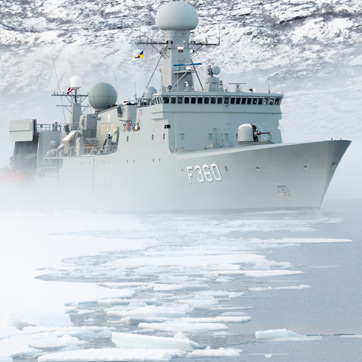
Forsvaret hævder kongeriget Danmarks suverænitet i hele Rigsfællesskabet. Arktisk Kommando har ansvaret for et område fra Færøerne i øst til farvandene omkring Grønland i nord og vest. Opgaverne omfatter det militære forsvar, men Forsvaret støtter også med en lang række opgaver af mere civil karakter som eftersøgning og redning, fiskeriinspektion, miljøovervågning og forureningsbekæmpelse.
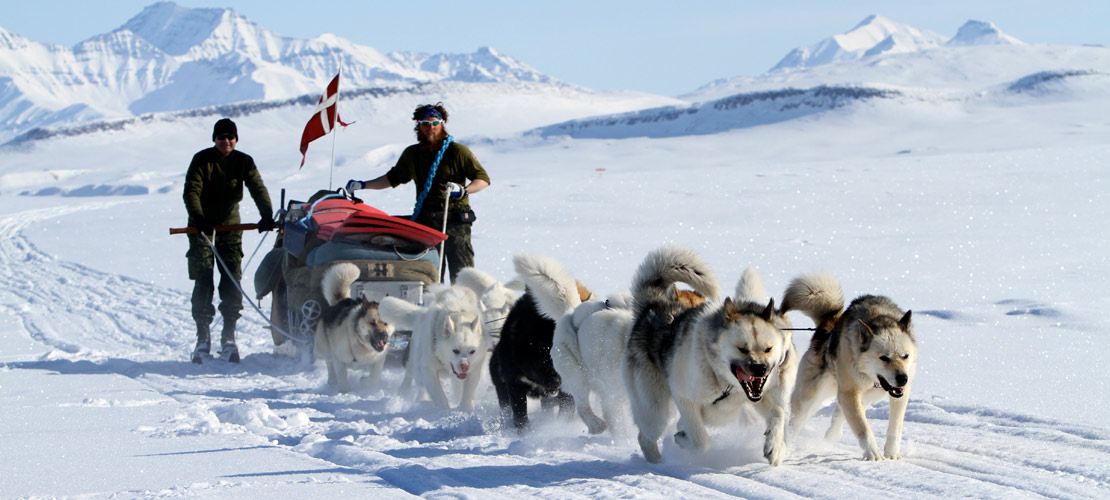
Slædepatruljen Sirius gennemfører overvågning og suverænitetshævdelse i verdens største nationalpark i Nordøstgrønland. Patruljen varetager også politimyndigheden i nationalparken. Foto: Søværnet
I lyset af den ændrede sikkerhedspolitiske situation i Europa skal Danmark have en stærkere mobiliseringsevne. Værnepligtige skal kunne indgå direkte i Forsvarets operative opgaveløsning og være med til at sikre en bredere og dybere bemanding. Værnepligten er derfor forlænget til 11 måneder, og der er indført fuld ligestilling mellem mænd og kvinder.

Foto: Sophia Bianca Salskov Jakobsen / Forsvaret
Vinterudgaven af Honnør 2025 er sendt ud til Forsvarets ansatte. Læs magasinet her.

Forsvaret er en af Danmarks største og mest alsidige arbejdspladser og uddannelsesinstitutioner. Klik dig videre til information om værnepligt, uddannelse, karriereveje og jobmuligheder i Forsvaret.

Det kræver mental styrke og stålfast vilje at komme igennem uddannelsen til soldat ved Frømandskorpset eller Jægerkorpset. Der stilles også ekstraordinære krav ved mange andre uddannelser i Forsvaret. Til gengæld bliver du en af de bedste på dit område. Foto: Christian Sundsdal / Forsvaret

Værnepligt kan være en kort oplevelse, der flytter dig for altid. Eller en indgang til utallige muligheder på en af Danmarks største og mest alsidige arbejdspladser. Foto: Rebekka Gimm / Forsvaret